1. Introduction:
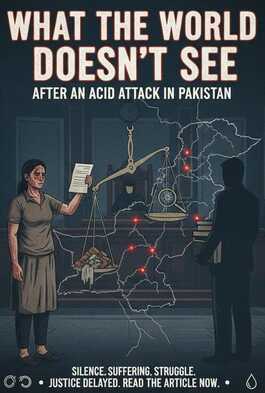
When the news shows pictures of an acid attack, most people stop at the horror of the face they see. They do not see the long nights of pain and shame that follow. In Pakistan survivors live with scars on their bodies, and scars deeper than skin.
2. Life After the Attack
2.1 Social Isolation:
The physical wounds are only the start. Survivors go through many surgeries, repeated hospital visits, and long painful dressings, but the real wound is often loneliness. Many survivors feel they have been stripped of their place in the family and the community. Some are stopped from leaving the house, some are ignored at gatherings, and some are quietly blamed as if they caused their own suffering. These reactions make survivors avoid people, and they often stop going to work or school.
2.1.1 Mental health problems:
Depression, panic attacks, fear of mirrors and constant nightmares are common. Many survivors say they grieve their old lives every day. Some dream of revenge, some dream of running away, and some think life is no longer worth living. The psychological pain lasts for years, and good counselling is rare outside the big cities.
2.1.2 The legal path is slow and painful too.
Getting an FIR registered can be difficult. Investigations are often delayed, and evidence may be lost when a victim is rushed away for treatment. Even when courts convict, the process can take years. A Sindh High Court judgment shows how courts still convict in clear cases, but survivors wait long for that justice. See Spl. Cr. A.T. Jail Appeal No. 128 of 2020, Muneer Ahmed versus The State, Sindh High Court, judgment announced 25 April 2022
When the news shows pictures of an acid attack, most people stop at the horror of the face they see. They do not see the long nights of pain and shame that follow. In Pakistan survivors live with scars on their bodies, and scars deeper than skin.
2. Life After the Attack
2.1 Social Isolation:
The physical wounds are only the start. Survivors go through many surgeries, repeated hospital visits, and long painful dressings, but the real wound is often loneliness. Many survivors feel they have been stripped of their place in the family and the community. Some are stopped from leaving the house, some are ignored at gatherings, and some are quietly blamed as if they caused their own suffering. These reactions make survivors avoid people, and they often stop going to work or school.
2.1.1 Mental health problems:
Depression, panic attacks, fear of mirrors and constant nightmares are common. Many survivors say they grieve their old lives every day. Some dream of revenge, some dream of running away, and some think life is no longer worth living. The psychological pain lasts for years, and good counselling is rare outside the big cities.
2.1.2 The legal path is slow and painful too.
Getting an FIR registered can be difficult. Investigations are often delayed, and evidence may be lost when a victim is rushed away for treatment. Even when courts convict, the process can take years. A Sindh High Court judgment shows how courts still convict in clear cases, but survivors wait long for that justice. See Spl. Cr. A.T. Jail Appeal No. 128 of 2020, Muneer Ahmed versus The State, Sindh High Court, judgment announced 25 April 2022
2.1.3 Turning Points in the Law:
There are landmark moments that changed the law in Pakistan. The case of Naila Farhat reached the Supreme Court in 2009 and pushed the government to act. That case helped bring attention to the need for stronger laws, and it led to clearer rules for punishment and for care of survivors. Naila won a difficult fight, and her case is a reminder that the law can help, if people keep fighting. See Human Rights Case No. 12912-P of 2009.
3. Conclusion:
Acid attacks are not only physical crimes, they are social wounds that cut survivors off from life, work and dignity. The headlines show the flames and the scars, but the world must also see the loneliness, the fear and the fight for justice that follows. Pakistan has taken steps to change the law, and some courts do hand down punishments. Still we must do more. We must welcome survivors back into family and community life, provide mental health care, and make police and courts work faster. Only then will we be truly seeing what comes after an acid attack.
4. References and Case Citations:
4.1 Acid Survivors Foundation report, situational analysis of acid violence in Pakistan.
4.2 Sindh High Court judgment Spl. Cr. A.T. Jail Appeal No. 128 of 2020, Muneer Ahmed versus The State, announced 25 April 2022.
4.3 Human Rights Case No. 12912-P of 2009, Naila Farhat, Supreme Court of Pakistan.
There are landmark moments that changed the law in Pakistan. The case of Naila Farhat reached the Supreme Court in 2009 and pushed the government to act. That case helped bring attention to the need for stronger laws, and it led to clearer rules for punishment and for care of survivors. Naila won a difficult fight, and her case is a reminder that the law can help, if people keep fighting. See Human Rights Case No. 12912-P of 2009.
3. Conclusion:
Acid attacks are not only physical crimes, they are social wounds that cut survivors off from life, work and dignity. The headlines show the flames and the scars, but the world must also see the loneliness, the fear and the fight for justice that follows. Pakistan has taken steps to change the law, and some courts do hand down punishments. Still we must do more. We must welcome survivors back into family and community life, provide mental health care, and make police and courts work faster. Only then will we be truly seeing what comes after an acid attack.
4. References and Case Citations:
4.1 Acid Survivors Foundation report, situational analysis of acid violence in Pakistan.
4.2 Sindh High Court judgment Spl. Cr. A.T. Jail Appeal No. 128 of 2020, Muneer Ahmed versus The State, announced 25 April 2022.
4.3 Human Rights Case No. 12912-P of 2009, Naila Farhat, Supreme Court of Pakistan.