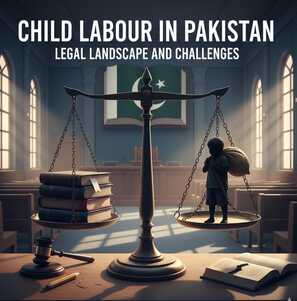
Social injustice wears many faces discrimination, inequality, exploitation but one of its most visible and persistent forms in Pakistan is child labour. The two are deeply connected: child labour both stems from and perpetuates injustice. It robs children of education, health, and dignity, locking them into cycles of poverty that often last generations. In Pakistan, the problem has existed for decades, but the urgency for change has never been greater.
Yet progress is painfully slow undermined by judicial delays, systemic complacency, and a lack of political will. Weak enforcement of anti-child labour laws has allowed an epidemic of underage work to thrive, stripping children of their rights and deepening the country’s political and economic instability.
This resistance to change is not just institutional it is woven into cultural and economic norms. In many households, children are seen not only as blessings but also as financial contributors. The idea of a child earning is normalised, even expected. But is that extra income worth sacrificing their childhood, their education, their potential?
The Legal Framework
On paper, Pakistan recognises the problem. The Employment of Children Act 1991 restricts working hours, lists hazardous occupations, and defines:
● Adolescent: aged 14–18
● Child: under 14
It also allocates enforcement responsibility to federal and provincial authorities. These definitions matter—they mark the line between legal and exploitative work. But when they are ignored, that line disappears.
Yet progress is painfully slow undermined by judicial delays, systemic complacency, and a lack of political will. Weak enforcement of anti-child labour laws has allowed an epidemic of underage work to thrive, stripping children of their rights and deepening the country’s political and economic instability.
This resistance to change is not just institutional it is woven into cultural and economic norms. In many households, children are seen not only as blessings but also as financial contributors. The idea of a child earning is normalised, even expected. But is that extra income worth sacrificing their childhood, their education, their potential?
The Legal Framework
On paper, Pakistan recognises the problem. The Employment of Children Act 1991 restricts working hours, lists hazardous occupations, and defines:
● Adolescent: aged 14–18
● Child: under 14
It also allocates enforcement responsibility to federal and provincial authorities. These definitions matter—they mark the line between legal and exploitative work. But when they are ignored, that line disappears.
The Constitution of Pakistan is equally clear. Article 37(e) demands humane work conditions and forbids employment unsuited to a child’s age or sex. Article 11 explicitly bans slavery, forced labour, and all forms of child labour. The Bonded Labour System (Abolition) Act 1992 punishes offenders with 2–5 years in prison and fines of Rs. 50,000–200,000. The problem is not the absence of law—it is the absence of enforcement.
Implementation: Where It Breaks Down
Strong legislation means little without action. Enforcement agencies are underfunded, labour officers undertrained, and monitoring systems weak. Judicial follow-through is inconsistent.
Accurate data is also missing. A Gallup UK study highlights the challenge of tracking child labour in Pakistan’s vast informal economy and in remote rural areas. The worst exploitation occurs in unregulated sectors domestic work, agriculture, brick kilns, street vending where inspections are rare. Without data, targeted solutions remain guesswork.
Coordination is another barrier. Labour departments, law enforcement, and the judiciary often operate in isolation. As Acemoglu and Robinson note in Why Nations Fail, when state institutions fail to work together, collapse from within becomes a greater threat than any external force.
Strengthening the Fight
The Employment of Children Act 1991 must be updated for today’s realities:
● Expand the list of hazardous occupations
● Enforce the minimum working age without compromise
● Impose stricter penalties
● Mandate inspections in informal sectors
Implementation: Where It Breaks Down
Strong legislation means little without action. Enforcement agencies are underfunded, labour officers undertrained, and monitoring systems weak. Judicial follow-through is inconsistent.
Accurate data is also missing. A Gallup UK study highlights the challenge of tracking child labour in Pakistan’s vast informal economy and in remote rural areas. The worst exploitation occurs in unregulated sectors domestic work, agriculture, brick kilns, street vending where inspections are rare. Without data, targeted solutions remain guesswork.
Coordination is another barrier. Labour departments, law enforcement, and the judiciary often operate in isolation. As Acemoglu and Robinson note in Why Nations Fail, when state institutions fail to work together, collapse from within becomes a greater threat than any external force.
Strengthening the Fight
The Employment of Children Act 1991 must be updated for today’s realities:
● Expand the list of hazardous occupations
● Enforce the minimum working age without compromise
● Impose stricter penalties
● Mandate inspections in informal sectors
Education is the long-term solution. If children are in classrooms, they are far less likely to be in workplaces. This means free, quality education paired with school meal programmes, scholarships, and community-based learning.
Brazil’s “Bolsa Família” programme offers a useful model: families receive financial aid if their children attend school, and inspectors regularly target high-risk industries. Pakistan could adapt this mix of social safety nets and enforcement.
The Global and Corporate Dimension
Child labour is a global issue. Pakistan should work closely with the International Labour Organization (ILO) and UNICEF to gain technical expertise, funding, and access to proven strategies.
Multinational corporations sourcing from Pakistan—whether textiles, surgical goods, or agriculture—must be legally required to audit their supply chains and certify they are child-labour-free.
Changing Minds and Supporting Families
Laws will fail if public attitudes stay the same. Community leaders, religious scholars, teachers, and NGOs must lead awareness campaigns with a simple message: a child working today is a dream lost tomorrow.
This must be backed by support cash transfers for struggling families, vocational training for parents, healthcare and counselling for working children, and rehabilitation centres to help them return to school.
Signs of Hope
Some progress exists. Punjab’s “Elimination of Child and Bonded Labour Project” has rescued children, gathered data, and raised awareness. These successes prove change is possible—when there is political will and consistent funding.
Conclusion
Child labour is more than a legal problem—it is a moral crisis, a measure of how a nation treats its most vulnerable. Pakistan has the laws. What it needs is enforcement, coordination, and a change in mindset.
If Pakistan strengthens its laws, ensures education for all, holds corporations accountable, and supports families, it can break the cycle. A nation that values its children values its future—and the time to act is now.
Brazil’s “Bolsa Família” programme offers a useful model: families receive financial aid if their children attend school, and inspectors regularly target high-risk industries. Pakistan could adapt this mix of social safety nets and enforcement.
The Global and Corporate Dimension
Child labour is a global issue. Pakistan should work closely with the International Labour Organization (ILO) and UNICEF to gain technical expertise, funding, and access to proven strategies.
Multinational corporations sourcing from Pakistan—whether textiles, surgical goods, or agriculture—must be legally required to audit their supply chains and certify they are child-labour-free.
Changing Minds and Supporting Families
Laws will fail if public attitudes stay the same. Community leaders, religious scholars, teachers, and NGOs must lead awareness campaigns with a simple message: a child working today is a dream lost tomorrow.
This must be backed by support cash transfers for struggling families, vocational training for parents, healthcare and counselling for working children, and rehabilitation centres to help them return to school.
Signs of Hope
Some progress exists. Punjab’s “Elimination of Child and Bonded Labour Project” has rescued children, gathered data, and raised awareness. These successes prove change is possible—when there is political will and consistent funding.
Conclusion
Child labour is more than a legal problem—it is a moral crisis, a measure of how a nation treats its most vulnerable. Pakistan has the laws. What it needs is enforcement, coordination, and a change in mindset.
If Pakistan strengthens its laws, ensures education for all, holds corporations accountable, and supports families, it can break the cycle. A nation that values its children values its future—and the time to act is now.