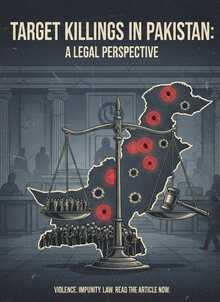
This short articles will cover the question that “Whether the target killing is in conformity with the principles of morality and justice?”
Target Killing is one of the most perennial feature of history. It exists in various different forms and it's frequency vary from time to time. In Ancient Greece, laws were passed to kill tyrant in order to preserve the essence of democracy. In 15th century, Europe the killing of foreign leaders was widely accepted. In the following years, the trend has been changed and target killing is prohibited in the international world. However, many individuals confidentially still engage in this kind of activity. It is defined as "The intentional and pre-meditated use of lethal force, by a State or organized armed group against a specific individual outside their physical custody." (Carvin,2012)
In the first place, Target killing includes violence that is against most of the humanitarian laws including the acts like bombing, toxins or radioactive material shooting, stabbing, or any other act that can harm body. Second and the most significant one is that these killings violate Right to life and liberty of human which according to UDHR and Constitution of Islamic Republic of Pakistan protected1. Furthermore, the violence is intentional and the source is targeting a person or a group. This only fact can distinguish between an accidental or unintentional killing and targeted killing. Third2 (Senn and Troy, 2017)
In Pakistan, many cases report as of murders but upon investigation end up as targeted killing. Out of 65 murders during robbery resistance, 18 upon investigation found out to be targeted and disguised as street crimes.3 (Pakistan Observer, 2024) Targeted killings happen due to many reasons in which hatred due to sect, religion, gender, race, are the most important one. Targeted killings of Shia doctors is one of the instances of severe hatred by the other Islamist group. These killings began in Punjab in mid 1990s and on its peak in 1998 onwards.4 Noticeable victims include Dr. Mathiur Rahman, Dr. Muhammad Naqvi, Dr. Altaf Bashir, etc. were killed due to sectarian hatred. PMA stated that in March 2002 almost 70 doctors have been victims of targeted killing just in Karachi alone and majority of them belong to Shia community .
Target Killing is one of the most perennial feature of history. It exists in various different forms and it's frequency vary from time to time. In Ancient Greece, laws were passed to kill tyrant in order to preserve the essence of democracy. In 15th century, Europe the killing of foreign leaders was widely accepted. In the following years, the trend has been changed and target killing is prohibited in the international world. However, many individuals confidentially still engage in this kind of activity. It is defined as "The intentional and pre-meditated use of lethal force, by a State or organized armed group against a specific individual outside their physical custody." (Carvin,2012)
In the first place, Target killing includes violence that is against most of the humanitarian laws including the acts like bombing, toxins or radioactive material shooting, stabbing, or any other act that can harm body. Second and the most significant one is that these killings violate Right to life and liberty of human which according to UDHR and Constitution of Islamic Republic of Pakistan protected1. Furthermore, the violence is intentional and the source is targeting a person or a group. This only fact can distinguish between an accidental or unintentional killing and targeted killing. Third2 (Senn and Troy, 2017)
In Pakistan, many cases report as of murders but upon investigation end up as targeted killing. Out of 65 murders during robbery resistance, 18 upon investigation found out to be targeted and disguised as street crimes.3 (Pakistan Observer, 2024) Targeted killings happen due to many reasons in which hatred due to sect, religion, gender, race, are the most important one. Targeted killings of Shia doctors is one of the instances of severe hatred by the other Islamist group. These killings began in Punjab in mid 1990s and on its peak in 1998 onwards.4 Noticeable victims include Dr. Mathiur Rahman, Dr. Muhammad Naqvi, Dr. Altaf Bashir, etc. were killed due to sectarian hatred. PMA stated that in March 2002 almost 70 doctors have been victims of targeted killing just in Karachi alone and majority of them belong to Shia community .
Their murder was just due to religious hatred.5 All these incidents are the violation of Pakistan Constitution6 and UDHR7 in international perspective.
Prior to 2014, the targeted killing in North Waziristan before operation Zarb-e-Azb was focused on tribal leadership. In the Data Khel air strike 2011 hit a jirga, 40 were killed and most of them were ordinary tribal leaders not militants. Most of tribesmen met the same fate of hanging, beheading, or firing squad. As of militants such as Ittehad-e-Mojahideen Khorasan, Lashkare jhangvi, and Lashkare Zil, they came into existence to conduct targeted killings. Ittehad-e Mojahideen Khorasan was closely linked with targeted killing of local spies. They beheaded them along roadside and pinned a note to their chest labelling them as U.S. Spies. All these militants organizations include hard core jihadist from different parts of world. Above all these killings, the fact can not be denied that these militants possessed extreme and absolute power and targeted killing become their most remunerative strategy to create fear among locals and killing them to strengthen their reign.8
Judicial system of Pakistan also face some problems while dealing with these cases. Judicial members criticize Police for their inadequate investigation as an exemption of cases but another key reason is the sense of lack of security. Absolutely it is the failure of state in not providing sufficient security to these judicial members. From the police officer who arrest the suspect, witness, lawyer seeking his conviction to the judge hearing his case all are at risk. This caused the backlog of cases.9 A total of 2,273 Anti Terrorism Cases are currently pending with 1,372 awaiting cases of Sindh alone.10
To conclude the above discussion, Target killing is deeply rooted in our society. Whether it is in the form of stabbing, bombing or drone strikes by other countries, all forms are strictly condemned and against the principles of morality. It violates the fundamental right to life, liberty, security, freedom of speech, belief or religion and many more. The Political interference, delayed justice or impunity and lack of impactful policies are only enhancing threat of targeted killing.
Prior to 2014, the targeted killing in North Waziristan before operation Zarb-e-Azb was focused on tribal leadership. In the Data Khel air strike 2011 hit a jirga, 40 were killed and most of them were ordinary tribal leaders not militants. Most of tribesmen met the same fate of hanging, beheading, or firing squad. As of militants such as Ittehad-e-Mojahideen Khorasan, Lashkare jhangvi, and Lashkare Zil, they came into existence to conduct targeted killings. Ittehad-e Mojahideen Khorasan was closely linked with targeted killing of local spies. They beheaded them along roadside and pinned a note to their chest labelling them as U.S. Spies. All these militants organizations include hard core jihadist from different parts of world. Above all these killings, the fact can not be denied that these militants possessed extreme and absolute power and targeted killing become their most remunerative strategy to create fear among locals and killing them to strengthen their reign.8
Judicial system of Pakistan also face some problems while dealing with these cases. Judicial members criticize Police for their inadequate investigation as an exemption of cases but another key reason is the sense of lack of security. Absolutely it is the failure of state in not providing sufficient security to these judicial members. From the police officer who arrest the suspect, witness, lawyer seeking his conviction to the judge hearing his case all are at risk. This caused the backlog of cases.9 A total of 2,273 Anti Terrorism Cases are currently pending with 1,372 awaiting cases of Sindh alone.10
To conclude the above discussion, Target killing is deeply rooted in our society. Whether it is in the form of stabbing, bombing or drone strikes by other countries, all forms are strictly condemned and against the principles of morality. It violates the fundamental right to life, liberty, security, freedom of speech, belief or religion and many more. The Political interference, delayed justice or impunity and lack of impactful policies are only enhancing threat of targeted killing.
References:
1.Article 9 of Constitution of Pakistan and Article 3 of UDHR
2.https://doi.org/10.1080/13523260.2017.1336604
3.https://pakobserver.net/target-killing-arises-again-in-city/
4.This ratio has now declined mainly due to the immigration if militants Sindh and no action was taken against them.
5.See Amnesty International: Pakistan, No protection against Targeted killing
6.Article 19 (Freedom of speech and expression) and Article 20 ( Freedom to profess and practice religion)
7.Preamble of Universal Declaration of Human Rights and Article 18 and 19
8.https://doi.org/10.1177/26330024241242486
9.Ibid, Amnesty International
10. Blog See: CJP concerned at backlog of cases in ATCs by Terence J. Sigamony
1.Article 9 of Constitution of Pakistan and Article 3 of UDHR
2.https://doi.org/10.1080/13523260.2017.1336604
3.https://pakobserver.net/target-killing-arises-again-in-city/
4.This ratio has now declined mainly due to the immigration if militants Sindh and no action was taken against them.
5.See Amnesty International: Pakistan, No protection against Targeted killing
6.Article 19 (Freedom of speech and expression) and Article 20 ( Freedom to profess and practice religion)
7.Preamble of Universal Declaration of Human Rights and Article 18 and 19
8.https://doi.org/10.1177/26330024241242486
9.Ibid, Amnesty International
10. Blog See: CJP concerned at backlog of cases in ATCs by Terence J. Sigamony